New collaborative launches Rare Cancer Data Initiative to transform cancer research
With Catalytic Funding From Chan Zuckerberg Initiative’s Biohub, Case Comprehensive Cancer Center and the Rare Cancer Research Foundation Partner Via Alliance For Rare Cancers to Launch Unprecedented Data Generation Initiative for Rare Tumors
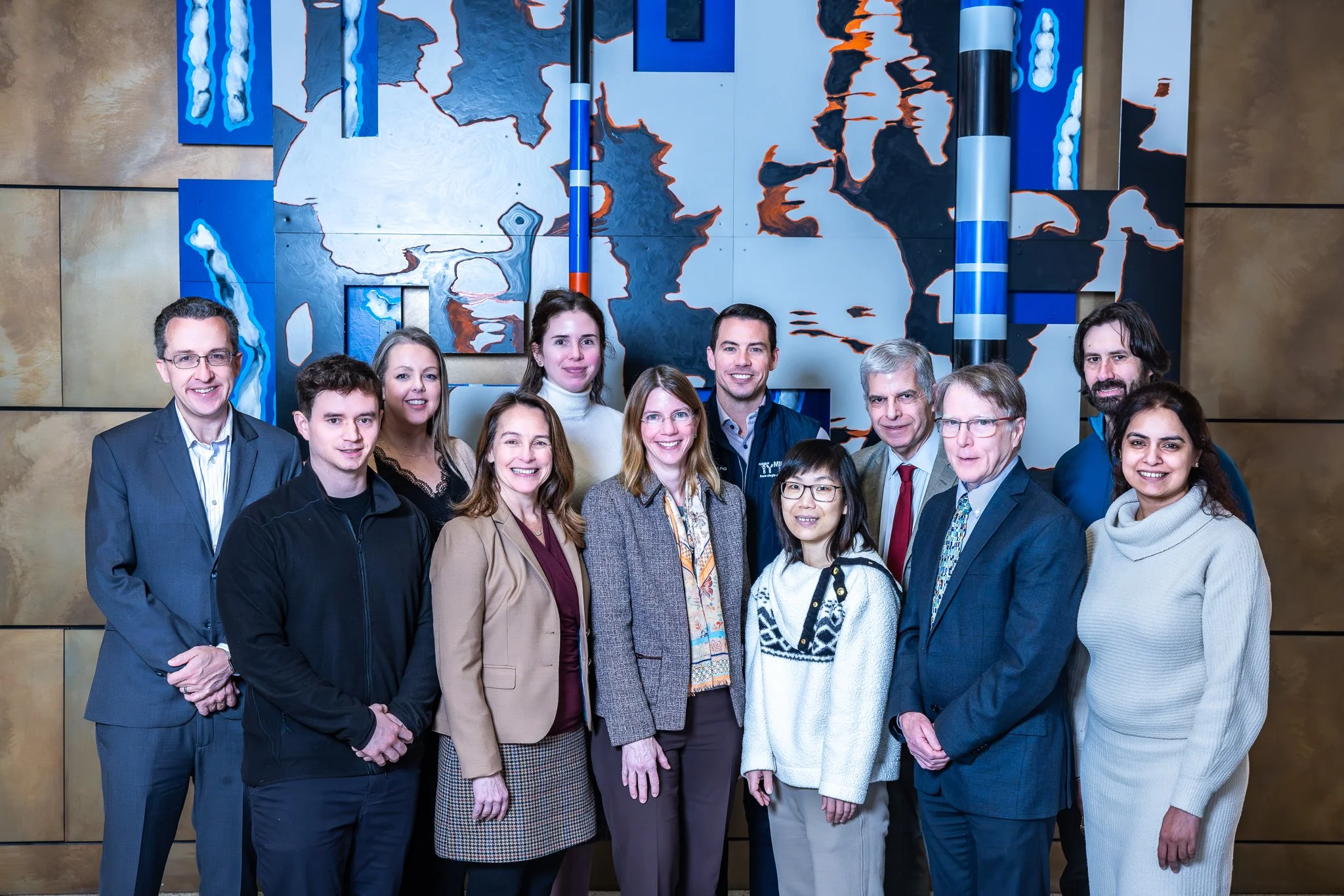
The Case Comprehensive Cancer Center (Case CCC), Rare Cancer Research Foundation (RCRF), and Alliance for Rare Cancers (ARC) today announced the launch of an ambitious two-year pilot program to create a scalable platform for deep characterization of rare tumors. Supported by catalytic funding from Biohub, the collaboration aims to transform rare cancer research by combining advanced translational science with patient-powered data collection to accelerate the development of breakthrough therapies.
Each year, one in four cancer patients in the United States is diagnosed with a rare cancer, yet most face limited or nonexistent treatment options. This new data generation initiative seeks to address that gap by building the foundational, high-resolution datasets needed to power next-generation immunotherapies and AI-driven treatment discovery for rare cancer patients.
Professionally managed by ARC, the initiative brings together RCRF’s pattern.org infrastructure for patient-directed tissue donation and open-source data sharing with Case CCC’s translational research and clinical capabilities. Together, the partners will rapidly generate machine-learning-ready molecular and clinical data across multiple rare tumor types.
Over the past decade, RCRF’s pattern.org initiatives have transformed how patients contribute to research, enabling individuals nationwide to donate excess tissue and medical records to advance understanding of their disease. RCRF’s Pattern Data Commons further supports this mission through a highly interoperable, open-source platform purpose-built for translational research in rare indications. This resource can be accessed by contacting info@rarecancer.org.
“Thanks to prior investments from the Chan Zuckerberg Initiative and now Biohub, we have built the infrastructure to collect, organize, and share high-dimensional molecular and clinical data from rare cancer patients,” said Marshall Thompson, Ph.D., Chief Technology Officer of RCRF. “This partnership extends patient empowerment by pairing that platform with world-class scientific capabilities, ensuring every tissue donation has maximum impact.”
The pilot program will focus on deep, single-cell-resolution characterization of tumors and their immune microenvironments to address critical questions about immune evasion, shared therapeutic vulnerabilities across rare cancers, and predictors of treatment response. “Investing in high-resolution characterization of rare tumors creates tremendous value—both for the patients in this pilot and for oncology as a whole,” said Tyler Miller, M.D., Ph.D., The Paul and Betsy Shiverick Professor of Immuno-Oncology and the initiative’s Principal Investigator at Case CCC. “It provides the data needed to identify new therapeutic strategies, including immunotherapies," he added.
Initially, the program will recruit patients diagnosed with select rare brain tumors and sarcomas, including:
Malignant (high-grade) meningioma
Pediatric glioma
Gliosarcoma
IDH-mutant gliomas (oligodendrogliomas and astrocytomas)
Pleomorphic xanthoastrocytoma (PXA)
Pilocytic astrocytoma
Craniopharyngioma
Ewing sarcoma
Osteosarcoma
Epithelioid hemangioendothelioma
Angiosarcoma
Desmoid tumor
Malignant peripheral nerve sheath tumor
Leiomyosarcoma
While these indications define the initial focus, the infrastructure is designed to readily extend across additional tumor types, and interest in expansion is encouraged throughout the pilot period.
ARC, founded in 2024 as a stakeholder-governed entity, will enable large-scale collaboration by providing strategic oversight and coordination for future expansion to cancer centers nationwide.
“This program represents a transformative moment for rare cancer research,” said Dr. Gary Schwartz, Director of Case CCC and Vice Chair of the ARC Board. “By uniting patient engagement, translational science, and coordinated collaboration, we are building a model that can finally deliver the data-driven insights rare cancer patients urgently need.”
About Case Comprehensive Cancer Center
Case Comprehensive Cancer Center is one of only 57 National Cancer Institute-designated Comprehensive Cancer Centers in the United States. It facilitates NCI funding for all cancer research, outreach, training and education for Case Western Reserve University, University Hospitals, and Cleveland Clinic, uniting these organizations to improve prevention, diagnosis, and treatment for 4.2 million families and individuals in 15 counties in Northeast Ohio and beyond. Learn more at case.edu/cancer
About the Rare Cancer Research Foundation (RCRF)
The Rare Cancer Research Foundation exists to build cancer research infrastructure that enables patients, researchers, and clinicians to partner more deeply in the search for better cancer treatments and, ultimately, cures. The mission of the Rare Cancer Foundation (RCRF) is to cure rare cancers through strategic investments and innovative collaborations that facilitate effective research and accelerate deployment of promising therapies. Through its pattern.org initiative, RCRF empowers patients to donate their tissue and/or medical data to various high-impact research projects, driving research by providing researchers with the tools and infrastructure needed to advance treatment development. Learn more at rarecancer.org and pattern.org.
About Alliance for Rare Cancers
Alliance for Rare Cancers, a fiscally sponsored program of the Jedi Rare Cancer Foundation, was founded in 2024 to unite the rare cancer community at scale to accelerate cures for all rare cancers. Governed by respected leaders across the rare cancer innovation system, ARC provides a venue for rare cancer stakeholders to co-create and implement large-scale collaborative partnerships across multiple rare tumor types to accelerate progress for patients. Learn more at allianceforrarecancers.org.
About Biohub
Biohub is a 501c3 biomedical research organization building the first large-scale initiative to combine frontier AI and frontier biology to solve disease. With its compute capacity, AI research and engineering, and state-of-the-art technology for measuring, imaging, and programming biology, Biohub is enabling scientists worldwide to use AI-powered biology to study how cells operate and organize as systems—ultimately understanding why disease happens and how to cure or prevent it. Learn more at biohub.org.
